
There's something soul-soothing about a warm bowl of soup, especially when it’s packed with layers of flavor and comfort. This Miso Chicken Noodle Soup Recipe brings together tender chicken, earthy shiitake mushrooms, and silky noodles in a fragrant miso broth that just feels like a big, cozy hug.

Jump to:
Why You'll Love This Recipe
I absolutely adore this miso chicken noodle soup because it’s a perfect blend of quick, nutritious, and downright delicious. I’ve made it countless times when I wanted something hearty, but light and not too fussy. It’s one of those dishes you feel good about eating and even better sharing with friends or family.
- Simple ingredients, big flavor: Miso paste, ginger, and garlic create a broth that's rich without being heavy.
- Quick to prepare: From start to finish in under 30 minutes, perfect for busy weeknights.
- Healthy and comforting: Lean chicken thighs and lots of veggies make it nourishing and cozy.
- Customizable: Easy to swap out veggies or noodles depending on what’s in your pantry.
Ingredients & Why They Work
The magic of this Miso Chicken Noodle Soup Recipe lies in balancing deep umami from miso and mushrooms with the subtle sweetness of carrots and brightness from bell peppers and vinegar. Using chicken thighs keeps the meat juicy, while the thin rice noodles soak up all that delicious broth.

- Chicken thighs: I prefer thighs over breasts for their moist texture and richer flavor that holds up well in soup.
- Olive oil: Used for browning the chicken and sautéing veggies—adds subtle fruitiness and helps build layers of flavor.
- Yellow onion: Gives a sweet base that mellows as it cooks, balancing aromatic notes.
- Shiitake mushrooms: Their earthy, meaty taste adds umami depth; you can swap cremini mushrooms if you prefer a milder flavor.
- Carrots: For natural sweetness and a bit of crunch contrast to soft noodles and bok choy.
- Ginger & garlic: Freshly grated and minced, they brighten and warm up the broth, making it irresistibly fragrant.
- Chicken broth: Use a reduced sodium broth so you can control the salt easily and keep it from getting too salty.
- Soy sauce, rice vinegar, rice wine/pale sherry: These bring acidity, a hint of sweetness, and complexity that make the broth special.
- Red chili paste: Adds a subtle heat; adjust to your taste or omit if you want it milder.
- Thin rice noodles: They cook quickly and soft, but still maintain a lovely bite—cutting with kitchen shears makes eating easier!
- Red bell pepper: Boosts color and freshness right at the end for a mild crunch.
- White miso paste: The soul of the soup—dissolving it separately before adding prevents gritty texture and preserves delicate flavor.
- Baby bok choy: Adds vibrant green color and a fresh, slightly bitter balance to the richness of the broth.
Make It Your Way
While I love the classic combo here, this Miso Chicken Noodle Soup Recipe is super flexible — I encourage you to tweak it based on what you have or feel like. I often swap in kale or spinach if bok choy is absent, or use udon noodles for a chewier texture.
- Vegetarian Version: Leave out chicken and use vegetable broth with mushrooms and tofu instead; the miso base shines all on its own.
- Spice it Up: I sometimes add an extra teaspoon of chili paste or a sprinkle of toasted chili oil when serving, for a bolder kick.
- Noodle Swap: Udon, soba, or even ramen noodles can be great; just cook them separately and add at the end to avoid overcooking.
- Make it Heartier: Toss in some frozen edamame or extra shredded chicken after cooking for more protein and texture.
Step-by-Step: How I Make Miso Chicken Noodle Soup Recipe

Step 1: Brown the Chicken Just Right
Heat a tablespoon of olive oil in your soup pot over medium-high heat. Add the chicken thighs and brown on each side for about 2 minutes—you want some golden color, but don’t worry about cooking them through just yet. Then transfer them to a plate; this step adds a ton of flavor and helps seal in moisture for juicy chicken once shredded.
Step 2: Sauté Your Veggies to Build Flavor
In the same pot, pour the last tablespoon of olive oil and sauté the chopped onion and sliced carrots for about 3 minutes until they start to soften. Add shiitake mushrooms, freshly grated ginger, and minced garlic. Stir for another minute—the aroma at this point is incredible and sets the tone for your broth.
Step 3: Bring It All Together
Pop the browned chicken back in, along with the chicken broth, soy sauce, rice vinegar, Japanese rice wine (or sherry), and red chili paste. Bring everything to a boil, then lower heat and let it gently simmer for 10 minutes. The chicken becomes tender enough to shred easily, and the mushrooms soften up beautifully. If you prefer extra soft mushrooms, just simmer a bit longer once you remove the chicken.
Step 4: Perfect the Miso Broth
Transfer about a ladleful of hot broth to a separate bowl, then whisk in the miso paste until fully dissolved. This step is key — adding miso directly to boiling soup can make it gritty and lose its subtle nuances, so this method keeps it silky smooth and vibrant.
Step 5: Final Touches
Add the rice noodles and chopped red bell pepper to the pot and simmer for 2 minutes. Turn off the heat, then stir in the baby bok choy, shredded chicken, and miso mixture. Cover the pot and let it sit for 1-2 minutes until the noodles are perfectly al dente and bok choy is just wilted. Now you’re ready to serve!
Top Tip
Over the years, I’ve learned that technique and timing make all the difference in this Miso Chicken Noodle Soup Recipe. Here’s what really helped me nail it:
- Don’t Skip Browning: Even just a few minutes on the chicken before simmering adds so much depth to the broth.
- Miso Last, Always: Adding miso paste off-heat keeps the texture velvety and the flavors bright—boiling miso is a common mistake I made early on!
- Cut Those Noodles: If your rice noodles are long and unwieldy, chopping them with kitchen shears either before or just after cooking makes eating way easier and less messy.
- Fresh Veggies Matter: Adding red bell pepper and bok choy near the end keeps them bright and crunchy, balancing your warm broth.
How to Serve Miso Chicken Noodle Soup Recipe

Garnishes
I love to sprinkle fresh chopped scallions or cilantro over my bowl for a pop of color and freshness. Sometimes I add a squeeze of lime juice right before serving—it brightens everything up perfectly. A few toasted sesame seeds or a drizzle of chili oil can also elevate the soup with extra nuttiness or heat.
Side Dishes
This soup pairs beautifully with simple sides like steamed edamame, a crunchy cucumber salad, or some soft steamed buns if you’re feeling fancy. I’ve also enjoyed it alongside classic gyoza or crispy tempura veggies for an extra treat.
Creative Ways to Present
For special occasions, I like serving this soup in pretty ceramic bowls with rustic wooden spoons. Adding a bundle of fresh herbs on the side or a small dipping plate with chili oil invites guests to customize their bowls. You can also arrange the ingredients beautifully layered in a mason jar for a fun packed-lunch idea.
Make Ahead and Storage
Storing Leftovers
I usually store leftover soup in airtight containers in the fridge for up to 3 days. I keep noodles and veggies together with the broth because the rice noodles hold up pretty well overnight if not overcooked. Before reheating, sometimes I add a splash of water or broth to loosen the soup back up.
Freezing
Freezing this soup is totally doable, but I recommend freezing the broth and chicken separately without the noodles and bok choy to avoid sogginess. When ready, thaw and reheat the broth and chicken, then cook fresh noodles and wilt fresh greens into the warmed soup for the best texture.
Reheating
To reheat, gently warm the soup on the stovetop over medium-low heat to avoid boiling miso, stirring occasionally. If it seems thick, add a splash of broth or water. Adding fresh greens or cooked noodles at this stage will revive that just-made feel.
Frequently Asked Questions:
You certainly can, but keep in mind chicken breasts are leaner and can become dry if overcooked. To avoid this, cook them just until done and consider adding them later in the simmering process. Thighs are more forgiving and stay tender longer in soup.
White miso paste is often located in the refrigerated section of Asian groceries or specialty markets. If you don’t have one nearby, you can order it online from retailers like Amazon. It offers a mild, slightly sweet flavor perfect for this soup.
Absolutely! Udon, soba, or ramen noodles all work well. Just cook them separately according to package instructions and add them to the soup at the end to keep their texture. Avoid overcooking noodles directly in the broth to prevent mushiness.
The soup has a gentle heat from the red chili paste (sambal oelek), which you can easily adjust. If you prefer mild, use less or leave it out entirely—your call! For a kick, add more chili paste or a drizzle of chili oil when serving.
Final Thoughts
This Miso Chicken Noodle Soup Recipe quickly became one of my all-time favorites because it’s cozy, quick, and genuinely satisfying. I love that it feels special without complicated prep or hard-to-find ingredients, making it perfect for any night of the week. Give it a try—you’ll have a new go-to soup that hits all the right notes for comfort and flavor.
Print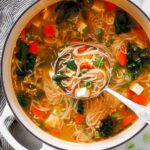
Miso Chicken Noodle Soup Recipe
- Prep Time: 10 minutes
- Cook Time: 15 minutes
- Total Time: 25 minutes
- Yield: 8 servings
- Category: Soup
- Method: Stovetop
- Cuisine: Japanese
Description
A flavorful and comforting Miso Soup with tender chicken, shiitake mushrooms, fresh vegetables, and delicate rice noodles, enriched with savory miso paste for a satisfying meal.
Ingredients
Protein
- 1 pound boneless skinless chicken thighs
Vegetables
- 1 medium yellow onion, chopped
- 6 oz. shiitake mushrooms, stems removed and caps sliced into ¼” strips
- 2 medium carrots, sliced (approx. 1 cup)
- 1 red bell pepper, chopped
- 4 heads baby bok choy cut into bite-size pieces, about 3 cups
- 1 tablespoon freshly grated ginger
- 4 garlic cloves, minced
Liquids and Sauces
- 8 cups reduced sodium chicken broth
- 1 tablespoon soy sauce
- 1 tablespoon rice vinegar
- 1 tablespoon Japanese rice wine or pale dry sherry
- ½ -1 tablespoon red chili paste (like sambal oelek)
- ¼ cup white miso paste
Other
- 3 oz. thin rice noodles (vermicelli/rice sticks)
- 2 tablespoons olive oil divided
Instructions
- Brown Chicken: Heat 1 tablespoon olive oil in a Dutch oven or soup pot over medium-high heat. Add the chicken thighs and brown on both sides for about 2 minutes without cooking through. Remove the chicken to a plate.
- Sauté Vegetables: Add the remaining tablespoon of olive oil to the pot and heat over medium-high heat. Add the chopped onions and sliced carrots; sauté for 3 minutes. Then add the sliced shiitake mushrooms, grated ginger, and minced garlic; sauté for another 1 minute.
- Simmer Chicken and Broth: Return the chicken to the pot. Pour in the reduced sodium chicken broth, soy sauce, rice vinegar, Japanese rice wine or sherry, and red chili paste. Bring the mixture to a boil, then reduce heat to medium-low and gently simmer for 10 minutes until the chicken is tender enough to shred. Remove the chicken and shred once cool enough to handle. Continue to simmer the soup if you want more tender mushrooms.
- Prepare Miso Mixture: Place the white miso paste in a medium bowl. Ladle some hot broth from the pot into the bowl and whisk until the miso paste completely dissolves. Set this mixture aside.
- Add Noodles and Vegetables: Add the thin rice noodles and chopped red bell pepper to the pot. Simmer for 2 minutes, then turn off the heat.
- Finish Soup: Add the baby bok choy, shredded chicken, and the dissolved miso mixture to the pot. Cover the pot and let it sit just until the noodles are al dente and the bok choy wilts, approximately 1-2 minutes. Do not boil or simmer after adding the miso to prevent grittiness.
Notes
- You can substitute cremini mushrooms for shiitake mushrooms; add them with the bell peppers as they cook faster and are less meaty.
- The rice noodles are very long; you can cut them a bit before adding, or use kitchen shears to cut them after cooking for easier eating.
- White miso paste may be found in the refrigerated section of grocery stores or at Asian markets; it is also available online.
- Baby bok choy can be substituted with spinach or kale if preferred.
Nutrition
- Serving Size: 1 cup
- Calories: 220 kcal
- Sugar: 4 g
- Sodium: 650 mg
- Fat: 8 g
- Saturated Fat: 1.5 g
- Unsaturated Fat: 6 g
- Trans Fat: 0 g
- Carbohydrates: 18 g
- Fiber: 3 g
- Protein: 20 g
- Cholesterol: 55 mg


Leave a Reply