
If you’re craving something that’s both vibrant and comforting, this Spicy Thai Red Curry Soup Recipe might just be your new favorite weeknight go-to. It’s got the perfect balance of creamy coconut, fiery curry, and fresh veggies that'll have you coming back for seconds!

Jump to:
Why You'll Love This Recipe
Honestly, this Spicy Thai Red Curry Soup Recipe has become a staple in my kitchen. It’s one of those easy recipes that feels fancy but takes hardly any effort—and the flavors? Absolutely addictive.
- Quick and Easy: From start to finish, it takes less than 30 minutes, perfect for busy nights.
- Balanced Flavors: You get silky coconut milk, the heat of red curry, plus fresh veggies—all in one bowl.
- Flexible Ingredients: You can swap veggies or add your favorite protein for a personalized touch.
- Comfort and Nutrition: It feels indulgent but is packed with wholesome goodness that keeps you satisfied.
Ingredients & Why They Work
Each ingredient in this Spicy Thai Red Curry Soup Recipe plays a key role, coming together to build layers of flavor and texture that keep it interesting and delicious. When you pick fresh, good-quality components, you’ll notice the difference immediately!

- Extra Virgin Olive Oil: for sautéing veggies without overpowering the delicate spices.
- Carrots: add sweetness and lovely texture as they soften in the broth.
- Red Bell Pepper: brings a bright, slightly smoky flavor that complements the curry.
- Onion: provides a savory base that deepens the overall soup.
- Garlic: essential for that warm, aromatic kick.
- Ginger: adds freshness and zing, balancing the heat.
- Red Curry Paste: the star spice that gives the soup its signature flavor and heat.
- Chickpeas: for creaminess, protein, and a filling bite.
- Vegetable Broth: the flavorful liquid that ties everything together.
- Full Fat Coconut Milk: gives the soup its rich, smooth texture and mellow sweetness.
- Rice Noodles: soak up the curry broth beautifully while adding substance.
- Sea Salt & Black Pepper: season to taste, bringing your soup to life.
- Lime Juice: a splash of acidity to brighten the whole dish.
- Cilantro & Lime Quarters (Garnish): fresh accents that lift the final presentation.
Make It Your Way
What’s great about this Spicy Thai Red Curry Soup Recipe is how easy it is to tweak. I love swapping in different veggies depending on what’s in my fridge or adding chicken for an extra protein boost. You can definitely make it your own.
- Veggie Swap: I sometimes use zucchini or snap peas when red bell pepper isn’t available; they add a nice crunch.
- Protein Boost: Adding shredded rotisserie chicken or tofu works wonderfully if you want a heartier bowl.
- Heat Level: If you prefer it milder, just reduce the red curry paste. Or toss in extra if you like things fiery!
- Make it Vegan: This recipe is naturally vegan if you pick vegetable broth and stick with chickpeas for protein.
Step-by-Step: How I Make Spicy Thai Red Curry Soup Recipe

Step 1: Sauté the Veggies Just Right
Start by heating olive oil over medium heat in a large heavy pot. Toss in the diced carrots and give them about 2 minutes to soften slightly. Then, add the red bell pepper, chopped onion, garlic, and minced ginger. Stir everything for about 1 minute until fragrant, but don’t let the garlic burn! This step builds the base flavor.
Step 2: Bring on the Curry and Chickpeas
Now stir in the red curry paste, making sure it coats the veggies evenly—that smell will hit you right away! Add in your rinsed chickpeas and pour the vegetable broth over everything. Bring the whole pot to a gentle simmer. This is where flavors start to meld beautifully.
Step 3: Coconut Milk and Noodles Finish the Soup
Pour in the coconut milk, and let the soup simmer for another 2-3 minutes until your veggies are tender but not mushy. Next, add the rice noodles, stirring as they soften—this helps break them up nicely so they absorb all that delicious broth. Squeeze in half a lime, then season with salt and pepper to your taste. Remove from heat and it’s ready to serve!
Top Tip
I’ve made this Spicy Thai Red Curry Soup Recipe dozens of times, and these tips always make the difference between a good, okay soup and something spectacular that friends ask for again and again.
- Don’t Overcook the Noodles: They cook quickly and can get gummy fast—stir often and watch closely.
- Toast Your Curry Paste Slightly: Give it a minute in the hot oil before adding broth to really deepen that flavor.
- Use Fresh Lime Juice: Bottled just doesn’t cut it here—the brightness makes all the difference.
- Season as You Go: Taste at every step and tweak salt and heat gradually so it’s perfectly balanced.
How to Serve Spicy Thai Red Curry Soup Recipe

Garnishes
I always top my bowls with fresh cilantro and a wedge of lime—those little extras brighten the whole soup and add a burst of freshness that balances the richness. Sometimes I add thinly sliced red chili for an extra kick or a sprinkle of toasted peanuts for crunch.
Side Dishes
I love pairing this with a simple side of jasmine rice or even some steamed dumplings if I want to serve something a bit more substantial. A light cucumber salad with a tangy dressing also complements the heat and creaminess perfectly.
Creative Ways to Present
For dinner parties, I like serving the soup in mini pumpkin bowls or deep ramekins. Adding edible flowers or fresh Thai basil instead of cilantro gives it an elegant twist that guests always comment on. It’s a great way to make it feel special without fuss.
Make Ahead and Storage
Storing Leftovers
Leftover soup keeps really well in the fridge for up to 3 days. I transfer it to an airtight container and cool it before popping it in. When you reheat, do it gently on the stove so the coconut milk doesn’t separate, and give it a good stir.
Freezing
I’ve frozen this soup before, but keep in mind the texture of the rice noodles changes after freezing. If you plan to freeze, you might want to leave the noodles out and add fresh ones when reheating. Freeze in portion-sized containers for convenience.
Reheating
For the best flavor, reheat the soup on the stove over medium-low heat, stirring occasionally. Avoid microwaving if you can. Add a splash of broth or coconut milk if it feels too thick. Finish with a squeeze of fresh lime and a sprinkle of cilantro before serving.
Frequently Asked Questions:
Absolutely! Just double-check that your red curry paste and vegetable broth are gluten-free, and use gluten-free rice noodles to keep it safe.
The heat mainly comes from the red curry paste. It has a nice kick but isn’t overwhelmingly spicy. You can control the spiciness by adjusting the amount of curry paste or adding more coconut milk to mellow it out.
Definitely! Shredded chicken, shrimp, or tofu are great options. Just add cooked protein toward the end of cooking to warm through without overcooking.
Reheat gently on the stove over medium-low heat, stirring occasionally. Avoid the microwave to prevent coconut milk from separating. Add a splash of broth or coconut milk if needed and finish with fresh lime juice for brightness.
Final Thoughts
This Spicy Thai Red Curry Soup Recipe holds a special place in my heart because it’s that perfect balance of cozy and vibrant, with enough spice to feel exciting but never overwhelming. I hope you’ll try it out and make it your own little escape on a chilly night—or any time you want a bowl of comfort with a kick. Let me know how it goes—friends don’t let friends miss out on good curry soup!
Print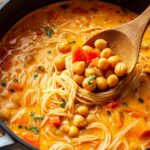
Delicious Recipe
- Prep Time: 10 minutes
- Cook Time: 15 minutes
- Total Time: 25 minutes
- Yield: 4 servings
- Category: Soup
- Method: Stovetop
- Cuisine: Thai
- Diet: Vegan
Description
This Thai Red Curry Soup is a vibrant and creamy dish featuring tender vegetables, chickpeas, and rice noodles simmered in a fragrant red curry coconut broth. Perfect for a comforting yet light meal, it combines bold Eastern flavors with wholesome ingredients.
Ingredients
Main Ingredients
- 2 tablespoons extra virgin olive oil
- 2 medium carrots, peeled and diced (about 1 cup)
- 1 medium red bell pepper, diced (about 1 cup)
- 1 small onion, chopped
- 3 garlic cloves, chopped
- 1 teaspoon ginger, minced
- 4 tablespoons red curry paste
- 1 can, 15 ounces chickpeas, drained and rinsed
- 4 cups vegetable broth
- 1 cup full fat coconut milk
- 7 ounces rice noodles
- sea salt, to taste
- ground black pepper, to taste
- juice of ½ a lime
For Garnish
- ½ cup cilantro, loosely packed
- lime quarters
Instructions
- Heat the oil: In a large heavy pot, heat 2 tablespoons of extra virgin olive oil on medium heat. Add the diced carrots and cook for about 2 minutes until they begin to soften.
- Sauté vegetables and aromatics: Add the diced red bell pepper, chopped onion, chopped garlic, and minced ginger. Stir well and cook for 1 minute to release their flavors.
- Add curry paste and chickpeas: Stir in 4 tablespoons of red curry paste, the drained and rinsed chickpeas, and 4 cups of vegetable broth. Bring the mixture to a gentle simmer.
- Incorporate coconut milk: Pour 1 cup of full fat coconut milk into the pot and continue to simmer on medium heat for 2 to 3 minutes until the vegetables are tender but still hold their shape.
- Cook the noodles and season: Add 7 ounces of rice noodles to the pot. Cook until softened, stirring regularly to break up the noodles into the broth. Squeeze the juice of half a lime into the soup, then season with sea salt and ground black pepper to taste.
- Garnish and serve: Remove the pot from heat. Ladle the soup into bowls and garnish each serving with loosely packed cilantro and lime wedges. Serve immediately for best flavor.
Notes
- For a spicier soup, add extra red curry paste or a pinch of crushed chili flakes.
- To make this gluten-free, ensure the rice noodles are certified gluten-free.
- You can substitute olive oil with coconut oil for a more authentic flavor.
- If you prefer a lighter texture, use light coconut milk instead of full fat.
- Leftovers can be stored in the refrigerator for up to 3 days and reheated gently on the stove.
Nutrition
- Serving Size: 1 bowl (approximately 1.5 cups)
- Calories: 350 kcal
- Sugar: 5 g
- Sodium: 600 mg
- Fat: 18 g
- Saturated Fat: 14 g
- Unsaturated Fat: 4 g
- Trans Fat: 0 g
- Carbohydrates: 38 g
- Fiber: 6 g
- Protein: 9 g
- Cholesterol: 0 mg


Leave a Reply